
Eight decision procedures
Nonionic PAM Trial Library
Nonionic PAM procedures for acidic-water selection, charge comparison, jar tests, dose calculation, weak-floc diagnosis, return water and supplier checks.
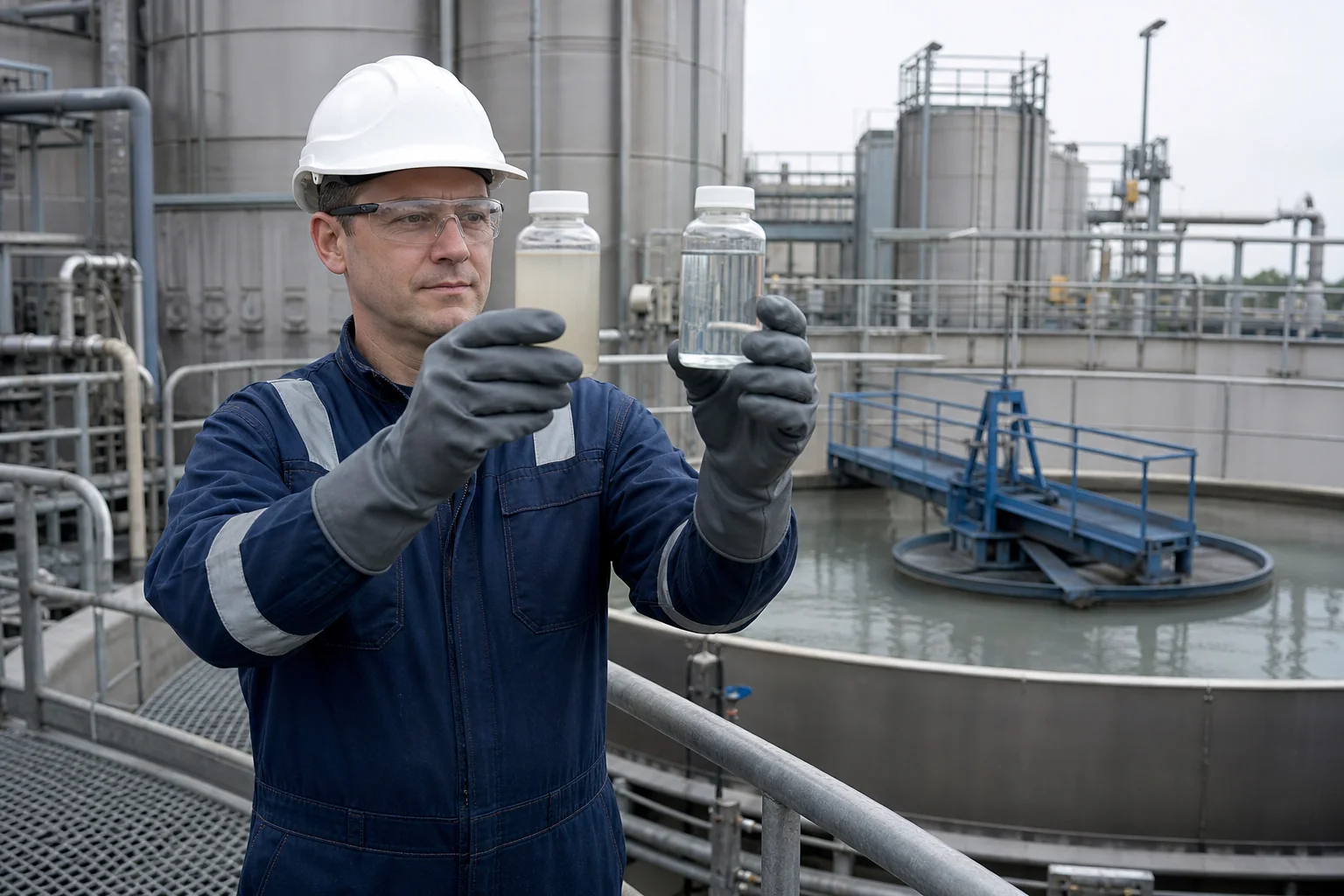
How to Choose Nonionic PAM for Acidic Wastewater
Choose nonionic PAM for acidic wastewater by defining precipitation, particle charge, coagulant sequence, jar-test endpoints, dose window and sludge handling.
Open procedure →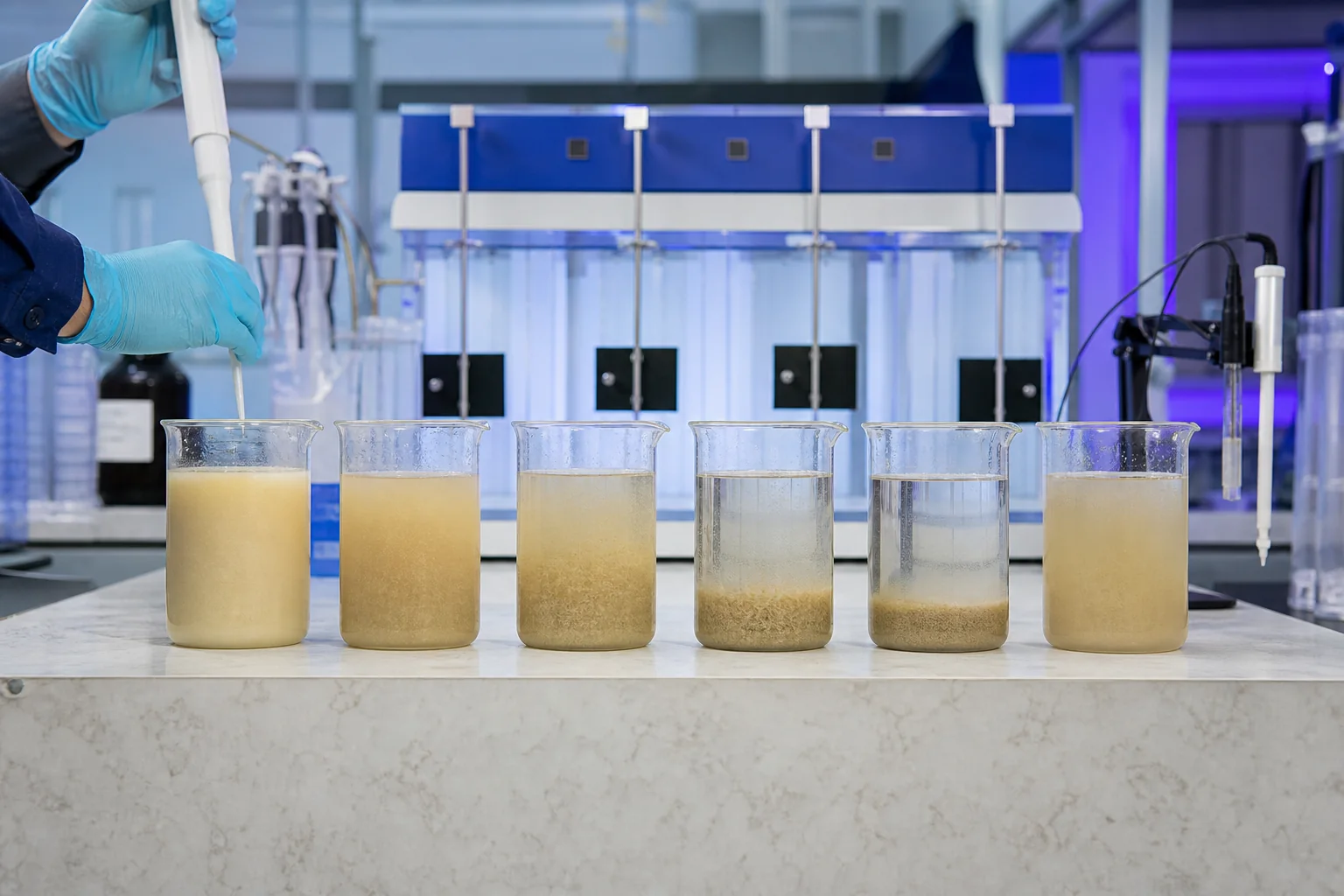
Nonionic PAM vs Anionic PAM: Which Trial Comes First?
Compare nonionic and anionic PAM through ionic character, feed chemistry, mineral surfaces, coagulants, settling, shear and downstream process effects.
Open procedure →Nonionic PAM Jar Test for Low-pH Suspensions
Run a low-pH nonionic PAM jar test with representative feed, controlled preparation, coagulant baseline, active-dose steps, shear and measurable endpoints.
Open procedure →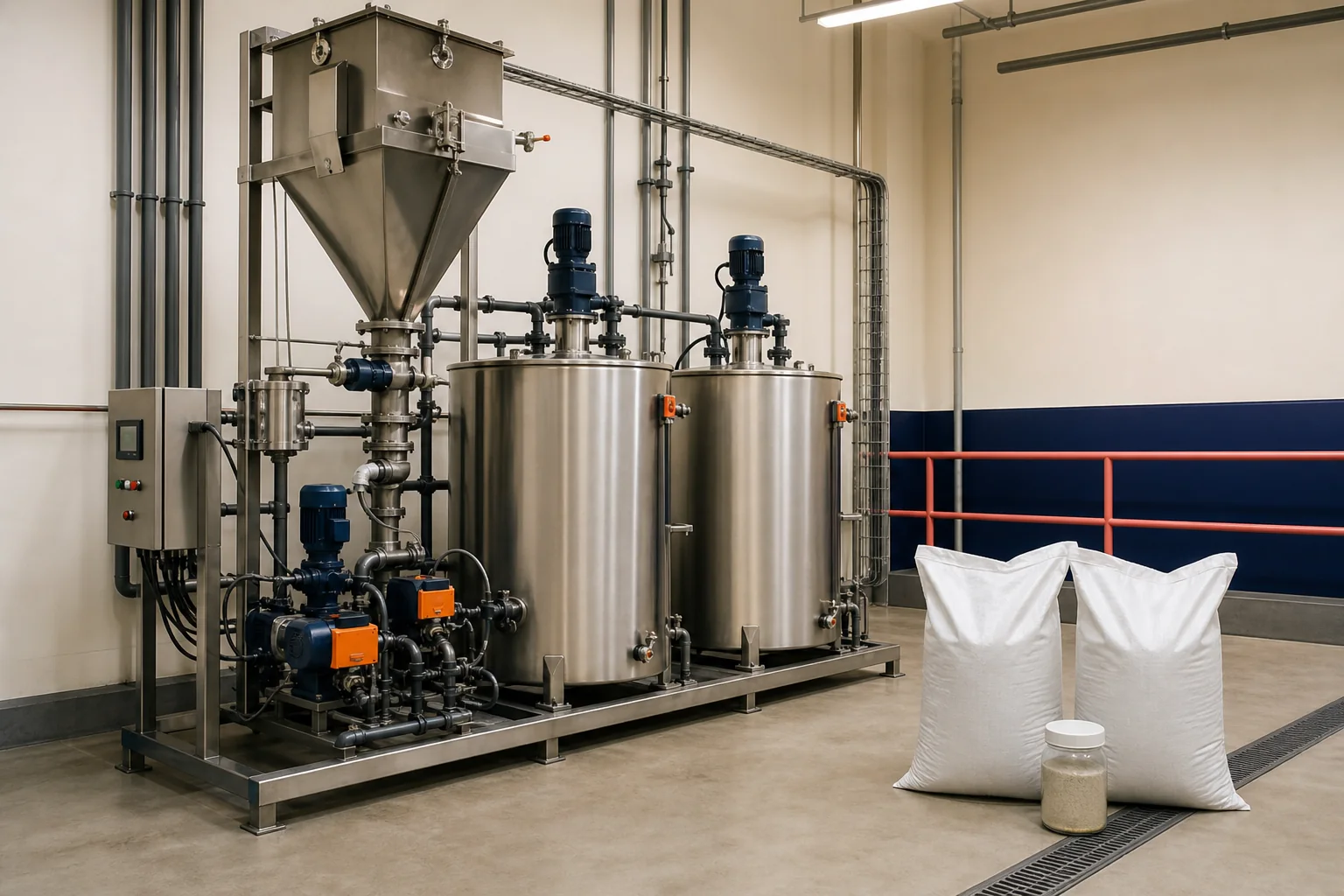
How to Calculate Nonionic PAM Dose per Dry Solids
Calculate nonionic PAM active dose from solution strength, pump flow, process flow and dry solids, then reconcile units and calibrate field delivery.
Open procedure →Why Nonionic PAM Produces Weak Floc or No Floc
Diagnose weak nonionic PAM response through feed chemistry, precipitation, solution preparation, active dose, mixing, shear and charge mismatch.
Open procedure →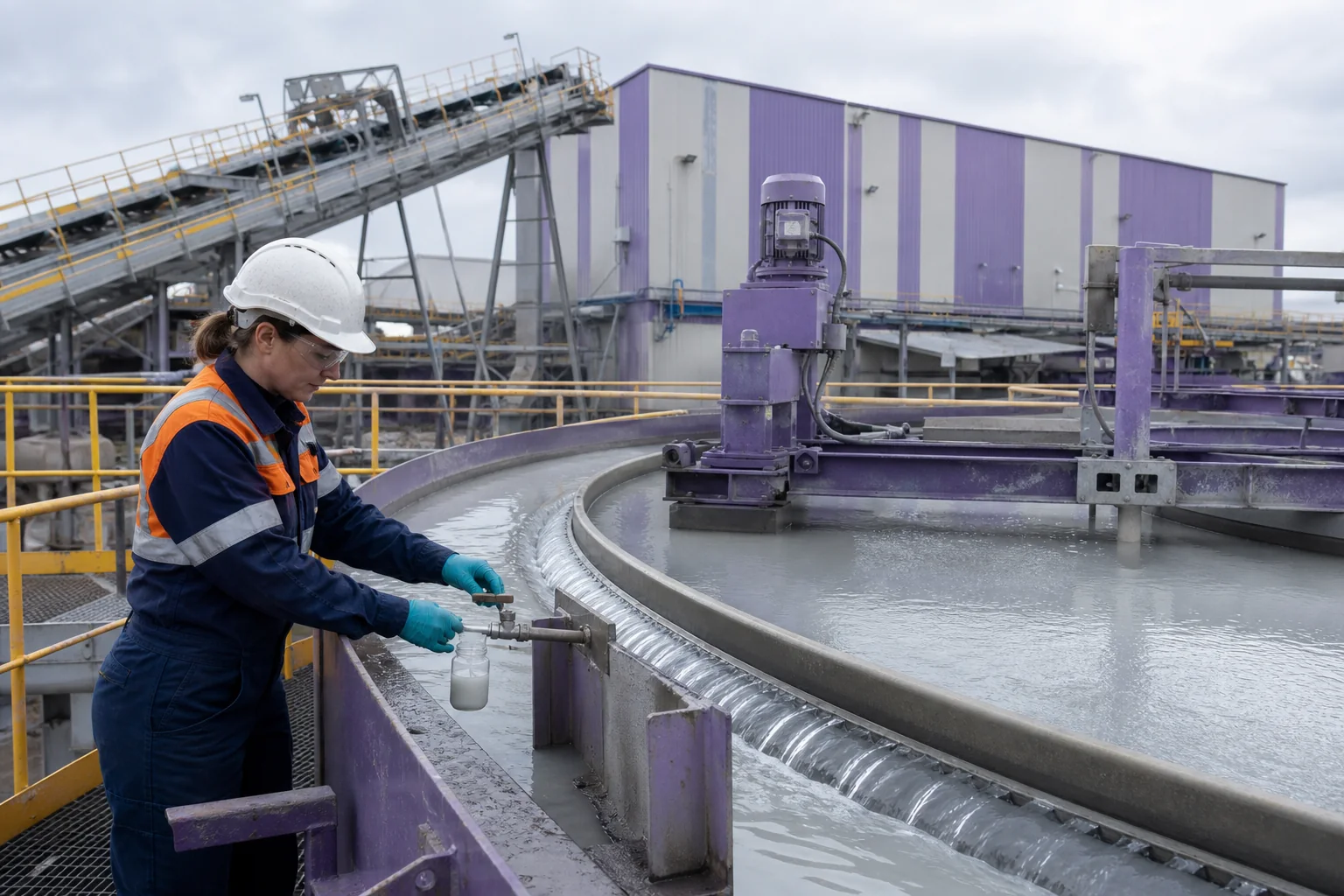
Nonionic PAM for Mineral-Processing Return Water Trials
Plan nonionic PAM mineral return-water trials around fines, dissolved ions, reagents, settling, water recovery, shear and downstream beneficiation response.
Open procedure →Nonionic PAM Solution Preparation and Aging
Prepare nonionic PAM solution by controlling powder induction, water quality, concentration, gentle mixing, maturation, tank residence and calibration.
Open procedure →Nonionic PAM Supplier Sample and COA Checklist
Evaluate a nonionic PAM supplier through sample identity, test methods, application evidence, COA consistency, packaging, documents and delivered cost.
Open procedure →