
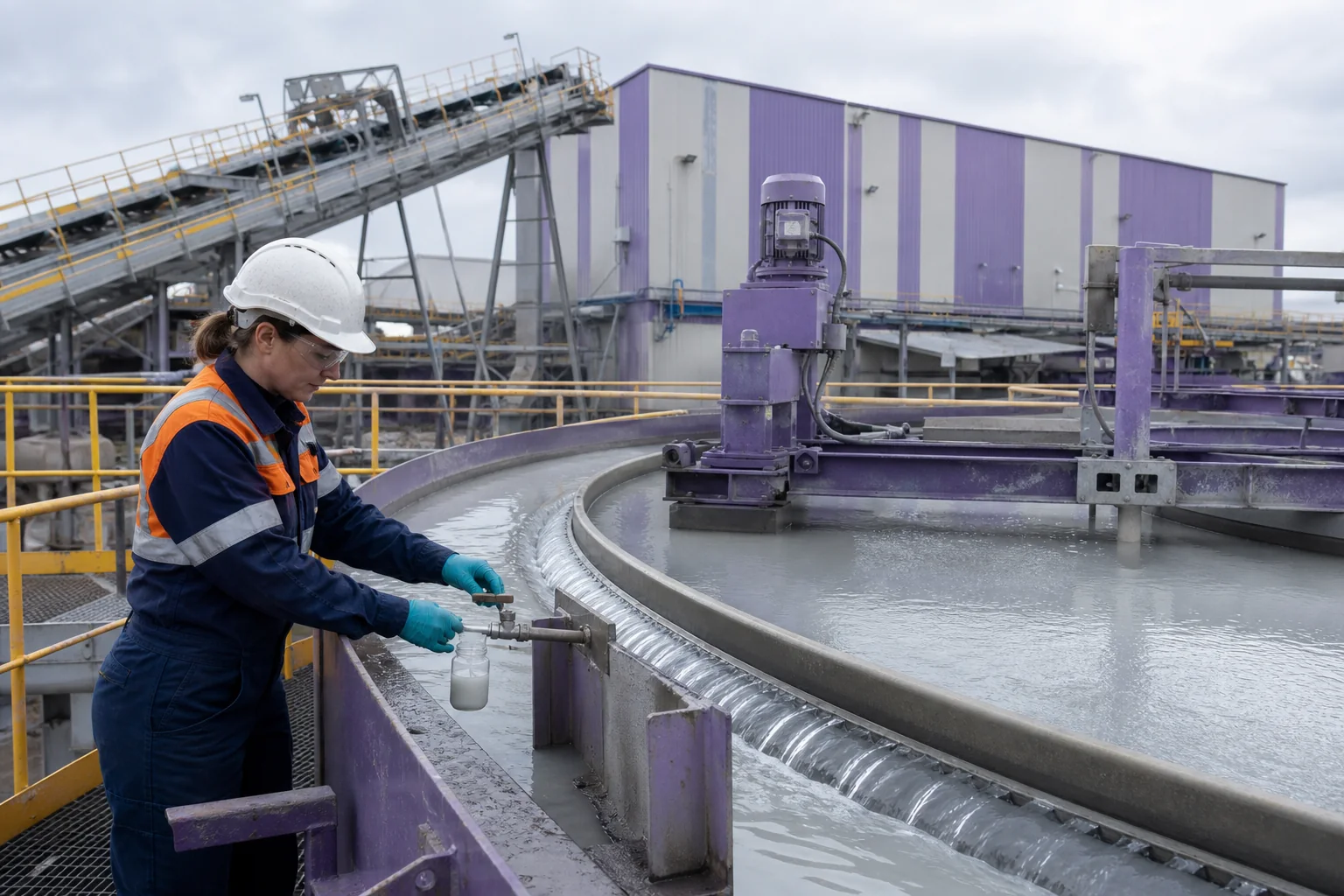
Nonionic PAM may belong in a saline-water candidate screen, but near-neutral does not mean salt-independent performance. The process feed and make-down water must be described separately. A purchase should follow representative separation and reuse evidence, not an assumed advantage over every charged polymer.
Describe more than conductivity
Record process-water origin, conductivity range and relevant ion information where available. Include solids, pH and upstream chemicals. Conductivity is a screening indicator rather than a complete description of the dissolved species. Explain normal recycle or concentration changes. A single mild sample should not be treated as proof of performance at the strongest condition expected during the proposed supply period.
Separate feed and preparation effects
Prepare one candidate under controlled make-down conditions and compare it on representative saline feeds. Where preparation water also changes, use a separate paired comparison so the two effects remain interpretable. The preparation guide keeps concentration and aging recorded. Do not simultaneously change water, dose and product then attribute the outcome solely to nonionic chemistry.
Measure the full circuit result
Assess water quality and the relevant compaction, filtration or solids-handling endpoint. Compare an appropriate ionic alternative where justified. For recycled process water, review the downstream use rather than assume clear appearance means compatibility. The return-water trial procedure treats upstream recovery or production effects as part of the approval, not an optional observation after a large purchase.
Keep the tested range on the order
Identify candidate, preparation-water source, feed-water envelope and useful dose band in the approval. State what was not evaluated. Request shipment documents and terms for that product code. If salt composition or upstream treatment changes materially, review the comparison. Do not describe any powder as universally salt-resistant or predict performance solely from the absence of a strong ionic label.
Keep an approval worksheet
Record the measured result or agreed document reference for each item. A missing observation remains a qualification limit, not an assumed pass. Use the same candidate identifier throughout sampling, quotation and receiving so a successful comparison cannot be transferred to an unreviewed product or process condition.
| Requirement | Evidence | Approval decision |
|---|---|---|
| Water envelope | Source, conductivity and relevant ions | Comparison represents intended chemistry |
| Experimental control | Separate feed and preparation-water tests | Water effects are not confused with product effects |
| Circuit result | Separation and relevant reuse endpoints | Approval covers useful operating conditions |
Prepare the sample and quotation request
Send process and preparation-water sources separately, solids, pH, salinity information, upstream chemicals and separator. Include dose curves and the reuse destination. Identify the expected extreme or changing condition that the candidate must cover before a repeat supply is approved.
Include quantity, packaging and destination alongside the operating record. The nonionic PAM sample worksheet helps define the comparison; the quality and supply requirements keep the approved product connected to its shipment. Gongyi Xinqi Polymer Co., Ltd. can review the application and commercial scope. Confirm grade suitability, delivery availability and terms for the selected candidate rather than infer a guaranteed result from the nonionic label.
Request a focused product review
Send feed, separator and purchasing requirements for the intended duty.