
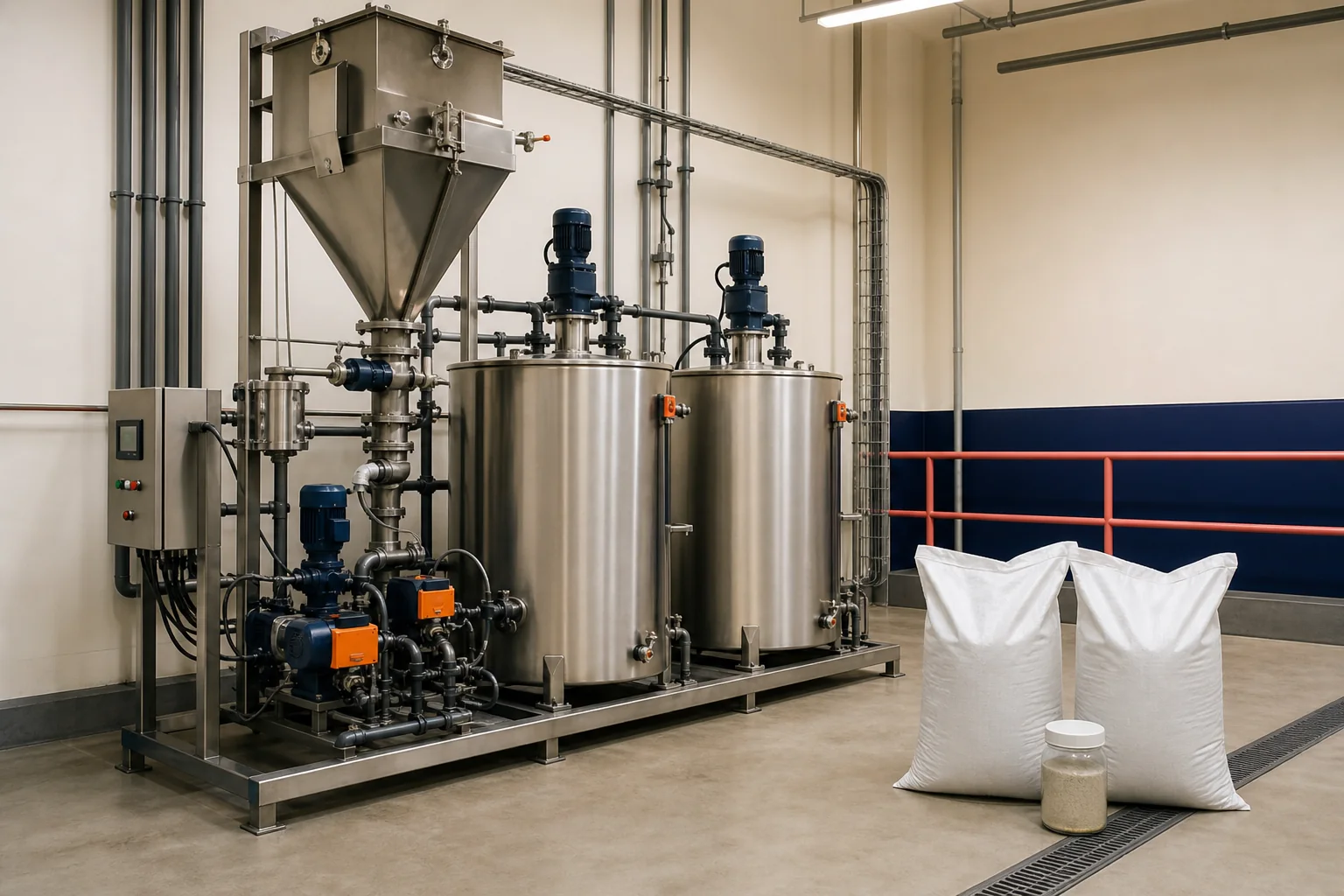
First-delivery release protects the connection between a nonionic PAM sample and the material ordered. Identity, physical condition and treatment response are separate checks. Decide how discrepancies will be resolved before the shipment reaches preparation, especially after a new supplier or product code is approved.
Match the delivery with the approval
Check the ordered code, lot markings and supporting documents against the candidate that passed. Label receiving samples and keep their container origin traceable. A bag marked nonionic polyacrylamide does not establish equivalence with a specific retained reference. The supplier-switch process covers technical substitution; receiving inspection should not silently authorize a different candidate.
Inspect handling condition
Observe package damage, moisture exposure and visible caking under site procedures. Confirm protected unloading and storage before opening product. Free-flowing appearance is useful but is not proof of composition or plant response. Record concerns and follow the agreed hold or release process. Mixing an unresolved delivery into existing stock can remove the traceability needed to investigate a later preparation or treatment change.
Read documents with their methods
Distinguish TDS characteristics, SDS information and agreed batch-release tests. Compare values only with the concentration, water, temperature and instrument conditions needed to interpret them. The COA checklist explains why a matching number does not establish universal application performance. A document review should support the qualified identity, not substitute for it.
Use a targeted reference comparison
For sensitive duties, compare retained and receiving samples on the same fresh feed and controlled preparation. Check water, concentration, calibration and feed changes before assigning cause to a lot. Record the observations and responsible decision. A difference can justify further review without proving a manufacturing defect. Release should state which identity and condition were verified and what qualification limits remain.
Keep an approval worksheet
Record the measured result or agreed document reference for each item. A missing observation remains a qualification limit, not an assumed pass. Use the same candidate identifier throughout sampling, quotation and receiving so a successful comparison cannot be transferred to an unreviewed product or process condition.
| Requirement | Evidence | Approval decision |
|---|---|---|
| Identity | Order, approved sample and lot markings | Unreviewed substitutions are held for clarification |
| Condition | Package and moisture observations | Material can enter preparation as intended |
| Response | Relevant paired-reference result | Release is supported by interpretable evidence |
Prepare the sample and quotation request
Provide the approved and received identifiers, lot and precise discrepancy. Include preparation and paired results if response changed, together with any concurrent feed or water change. Do not send an unlabelled powder or omit the sampling method needed to compare it fairly.
Include quantity, packaging and destination alongside the operating record. The nonionic PAM sample worksheet helps define the comparison; the quality and supply requirements keep the approved product connected to its shipment. Gongyi Xinqi Polymer Co., Ltd. can review the application and commercial scope. Confirm grade suitability, delivery availability and terms for the selected candidate rather than infer a guaranteed result from the nonionic label.
Request a focused product review
Send feed, separator and purchasing requirements for the intended duty.