
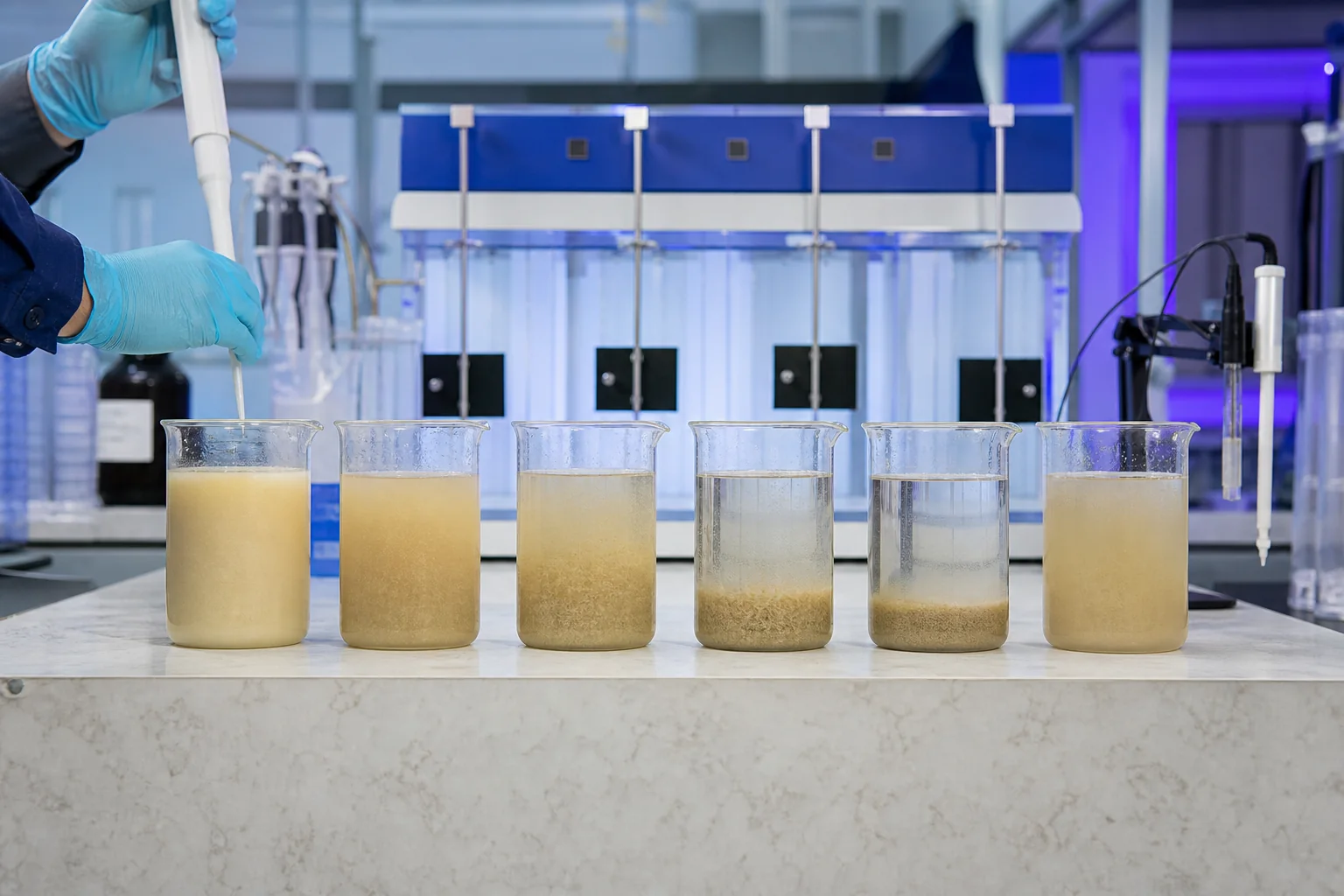
A low-hydrolysis description helps organize a nonionic PAM candidate, but it is not proof of zero charge or universal suitability. Purchasing needs an interpretable product description and a successful treatment comparison. Keep the numerical claim separate from the feed response that actually justifies the order.
Ask how ionic character is described
Request the candidate code and the method used to describe hydrolysis or ionic character. Establish whether the quoted range is a typical characteristic or an agreed release requirement. Different techniques and sample conditions can produce values that are not directly interchangeable. A label saying nonionic should not silently substitute for a verified measurement. The low-hydrolysis product profile provides the intended near-neutral screening context.
Compare against the relevant alternatives
Where the charge requirement is uncertain, include a suitable low-anionic reference alongside the nonionic candidates. Hold feed, upstream treatment, preparation and dose basis controlled. This comparison identifies whether limited ionic interaction is useful; it does not establish that nonionic is always the safer or stronger choice. Use the charge-family trial guide for the method, then judge the installed separator endpoint.
Retain molecular and preparation information
Similar hydrolysis descriptions do not establish the same molecular distribution, solution handling or treatment window. Record preparation water, concentration and aging, and compare usable solution as well as visible floc. A candidate that bridges well but cannot be delivered consistently by the plant may require a separate compatibility review. Avoid reducing the purchasing specification to one property that ignores those practical differences.
Approve the product rather than the adjective
The approval record should identify the candidate, tested feed range, preparation and relevant water or solids results. Request shipment documents using that identity. If the supplier changes the code or formulation description, clarify whether another comparison is needed. A favourable hydrolysis value is documentary evidence, not a replacement for application qualification or a claim of unrestricted use in sensitive water or product-contact duties.
Keep an approval worksheet
Record the measured result or agreed document reference for each item. A missing observation remains a qualification limit, not an assumed pass. Use the same candidate identifier throughout sampling, quotation and receiving so a successful comparison cannot be transferred to an unreviewed product or process condition.
| Requirement | Evidence | Approval decision |
|---|---|---|
| Description | Method, range and role of the ionic-character value | Documents are interpretable and comparable |
| Application | Paired candidate and alternative results | Near-neutral selection follows measured response |
| Identity | Code, preparation and approval limits | Order refers to the tested material |
Prepare the sample and quotation request
Send the required near-neutral profile, available supplier method information, feed chemistry, separator and the reason a charged alternative is being compared. Include measured dose and results rather than only a desired hydrolysis percentage. State the quantity and documentation requirements for the exact candidate.
Include quantity, packaging and destination alongside the operating record. The nonionic PAM sample worksheet helps define the comparison; the quality and supply requirements keep the approved product connected to its shipment. Gongyi Xinqi Polymer Co., Ltd. can review the application and commercial scope. Confirm grade suitability, delivery availability and terms for the selected candidate rather than infer a guaranteed result from the nonionic label.
Request a focused product review
Send feed, separator and purchasing requirements for the intended duty.