
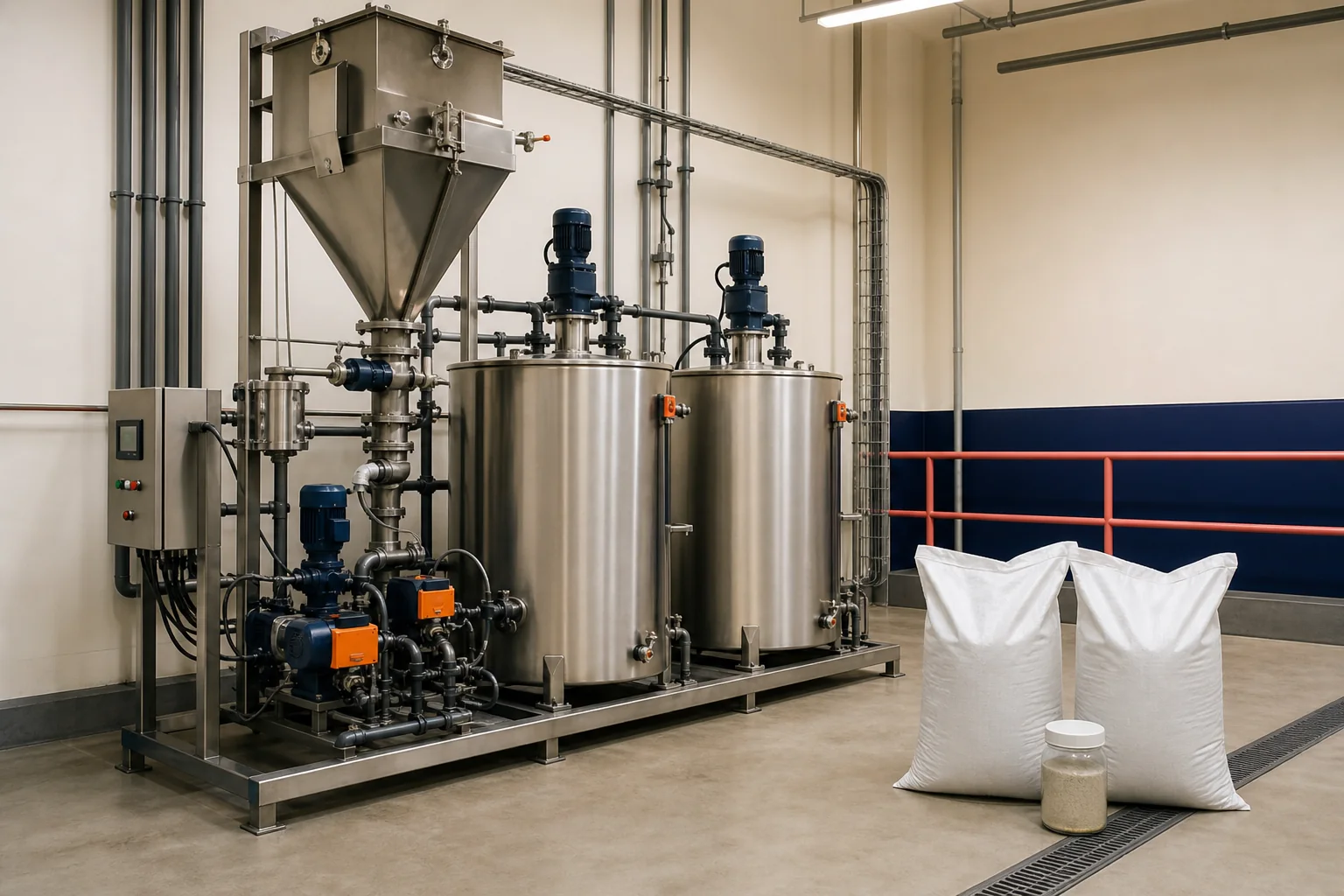
A nonionic PAM replacement must produce a useful solution that the plant can deliver reliably. Near-neutral chemistry does not guarantee identical viscosity or flow at the incumbent pump setting. Review preparation and dosing capacity alongside separation performance before converting a product recommendation into an order.
Specify the prepared solution conditions
Record water, concentration, temperature, mixing and age at dosing. Request measurement conditions with any supplier viscosity information. Figures obtained by different methods or stock strengths are not directly comparable. The preparation guide supports the baseline; a nominal recipe is insufficient if powder and water inputs are not measured.
Measure delivery with the actual solution
Use a safe, representative calibration method at relevant suction and discharge conditions. Review the arrangement with the equipment team, including practical handling limits. Do not infer output from water-rated capacity or an unchanged dial percentage. Normalize the result using the dose calculation so a delivery difference is not mistaken for a better or worse polymer.
Check concentration and inventory trade-offs
Dilution may improve delivery or distribution but increases the required solution volume. Assess usable tank volume, hydration cycle, transfer and peak demand together. Incompletely prepared stock is not a valid way to keep up with consumption. Include any necessary equipment or procedure change in the comparison. A performing grade can be unsuitable as a drop-in replacement if the installed system cannot supply it consistently.
Approve the method with the product
Retain concentration, water, preparation and measured delivery with the accepted separator response. State the operational range and required changes, including who will confirm them. Compare useful treatment cost instead of powder price alone. When a later lot or water change affects dosing, investigate calibration and preparation alongside product identity before reaching a conclusion about cause.
Keep an approval worksheet
Record the measured result or agreed document reference for each item. A missing observation remains a qualification limit, not an assumed pass. Use the same candidate identifier throughout sampling, quotation and receiving so a successful comparison cannot be transferred to an unreviewed product or process condition.
| Requirement | Evidence | Approval decision |
|---|---|---|
| Solution | Documented concentration, water and aging | Candidate is prepared on an interpretable basis |
| Pump | Actual delivery under representative conditions | Dose is measured rather than assumed |
| Capacity | Peak demand and usable inventory | Product and method fit the installed system |
Prepare the sample and quotation request
Provide preparation, stock concentration, measured output, tank cycle, peak demand and injection arrangement. Include current product and candidate handling observations. Explain whether the purchase must fit unchanged equipment or whether a separately reviewed capacity change is possible.
Include quantity, packaging and destination alongside the operating record. The nonionic PAM sample worksheet helps define the comparison; the quality and supply requirements keep the approved product connected to its shipment. Gongyi Xinqi Polymer Co., Ltd. can review the application and commercial scope. Confirm grade suitability, delivery availability and terms for the selected candidate rather than infer a guaranteed result from the nonionic label.
Request a focused product review
Send feed, separator and purchasing requirements for the intended duty.